Designing a playroom storage system that actually works
Every playroom has a moment when the toys take over. Lego spreads across the floor, the dress-up box empties itself beside the sofa, and the storage cube that looked clever on the showroom floor becomes a second obstacle course. The difference between a room that functions and one that collapses into chaos rarely comes down to style. It comes down to storage designed around how the children in your household actually behave, not how a catalogue imagines them behaving. Learn more about Why Natural Fiber Rugs Work In Almost Every Room.
Australian homes give the problem particular angles. A two-bedroom apartment in Melbourne or an inner-Sydney studio may have one 2.8 by 3.4 metre room doing the work of nursery, playroom and study. Family houses in Brisbane deal with a humidity that swells doors and encourages mould inside closed storage, while Perth's dry summer pushes fine dust into every gap. School holidays from late December through January also mean toys are in constant rotation for weeks on end, which turns a tidy system into an archaeological dig.
Working storage in this context means three things: a clear floor for play, a cleanup routine a five-year-old can manage alone, and enough flexibility to change as the child grows. If adults have to re-shelve and re-label every week, the system has already failed, no matter how good the joinery looks.
The method is straightforward. Start by auditing what the family owns and what gets used, map the room's existing strengths and dead zones, decide where the furniture will sit before anything is ordered, then build a routine around the result. The free room-styling checklist and the design walkthroughs on Jeeze Julia are useful for that first pass, because they push you towards decisions on paper rather than in the aisle of a store.
Measure the room before you buy the boxes
Measure the floor, the walls and the ceiling, then write down where the doors swing, where the windows sit and where the power outlets are. A playroom plan drawn from furniture dimensions alone is a fantasy; a plan drawn from the room's real geometry is a plan. Masking tape on the floor is a cheap way to test the footprint of a shelving unit before you commit, and it shows instantly whether the walk-through space survives.
Australian dwellings make this step non-negotiable. Standard child furniture has its own footprint here — Australian safety standards for play yards and cots (AS/NZS 2170 and AS/NZS 11604) assume specific room clearances, and a play yard needs a metre of clear space around every side for safe use. In apartments, also measure the front door, the lift and every turn in the stairwell, because flat-pack storage from Bunnings, IKEA Australia or Kmart often arrives in boxes too long to carry around a corner.
Leave a generous path between the main pieces, roughly 70 to 90 centimetres, so a child can move through the room without shoulder-checking a tower of tubs. Decide early which heights are for children and which are for adults: anything above about 120 centimetres is adult territory for sharp, heavy or breakable items, and keeping it there removes temptation and reduces the chance of a toppling stack.
Zone the room around real play, not tidy rows
Divide the room into a build zone, a dressing-up zone, a quiet corner and a cleanup bench, and let the furniture follow those jobs rather than lining the walls with identical units. The build zone wants open floor and low, wide containers. The dressing-up zone wants a rack or open hooks where costumes breathe instead of creasing in a drawer. The cleanup bench wants a surface at child height with a basket underneath, because carrying a full tub of blocks is the single hardest part of tidying.
A quiet corner earns its keep sooner than another shelf. A beanbag, a low table, a small lamp and a basket of picture books turn an awkward space into a cozy reading nook that a child will actually claim as their own. Place it near natural light but out of harsh afternoon glare, and resist the temptation to fill the surrounding floor with more furniture.
Think about your climate when you sit the zones. A reading spot under a west-facing window in a Brisbane or Perth summer is unusable by three o'clock, and a window seat that has to be shifted every time you clean the glass will quickly become a dumping ground. In cooler months, a corner away from the main heating vents usually reads as cosier than the space directly beside the heater, and it keeps the play zone in the warmest part of the room.
Choose materials that handle Australian conditions
Humidity and heat decide what furniture belongs in the room. Birch plywood, solid timber, powder-coated steel and sealed finishes handle a subtropical summer far better than bare particleboard or MDF, which swell at the joints and smell musty in enclosed spaces. Look for rounded corners, stable joinery and hardware that resists loosening, and check that any cots, play yards or climbing frames carry Australian safety certification rather than a generic sticker.
Textiles deserve the same scrutiny, and there is a good reason many designers in this country lean into natural fibres. Natural fiber rugs work in almost every room because they regulate temperature, absorb spills and can be cleaned without specialist equipment. Australian wool, jute and cotton handle a Melbourne winter and a Queensland summer better than synthetic pile, and wool's natural resistance to odour means a rug in a child's room survives between washes.
Fit the rug for the life it will live. Low pile or flat weave is easier to vacuum over scattered blocks; a wool rug with a washable underlay is a sensible choice if the room sits above ground level in a humid suburb. Always add a non-slip pad beneath any rug in a playroom, since a rug that slides is a trip hazard, and skip the rubber-backed foam mats that trap grit and dull over time.
Make the tidying routine obvious
Every toy needs one home, and every home needs a visible label. For children who cannot yet read, printed picture labels taped to the front of each container work better than colour alone, because a photo of the blocks tells them where the blocks live. Colour coding can be layered on top for older children, but the picture comes first and the words second.
Decanting is what keeps a toy room manageable. Keep all the small pieces in a handful of clear, lidded containers with a photo of the contents taped to the lid, grouped by type rather than by brand, so building sets and craft supplies do not vanish into a single lethal jumble. Big items go in one bin by themselves. Favour containers with wide openings, because a tub that requires careful aiming will be abandoned within a fortnight.
Make the routine small and specific: a one-minute floor reset before dinner, and a longer ten-minute sort on a weekend morning. Keep one shallow overflow basket on the floor and empty it properly, rather than redistributing clutter from one container to another. During the summer school holidays, take the whole room apart and rotate. Most families discover they have double the toys they need and half the shelf space they thought they did.
Use rugs and soft surfaces to define the play zone
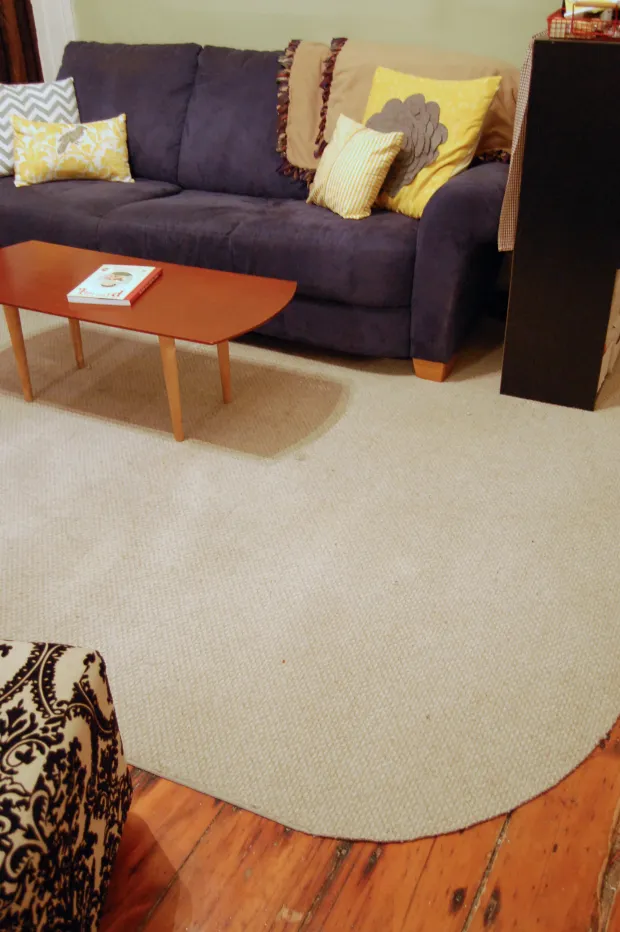
A rug is the cheapest and most flexible tool in a playroom because it draws a boundary that no piece of furniture can. It tells a child where the build zone begins, cushions hard floors when a toddler topples sideways, and gives a small apartment the visual separation that a missing wall cannot provide. In a compact Sydney or Melbourne flat, laying one large rug in the corner where the open floor sits can define a whole activity area in a single afternoon.
Getting layers right takes a little care. If you want depth without clutter, follow the steps in layering rugs like a pro and build from a large base rug to a smaller one on top, keeping the palette tight so the room reads as one space. Put a non-slip pad under every layer, not just the bottom one, because the top rug is the one most likely to skid when a child runs across it.
Soft surfaces also absorb sound, which matters in apartments with neighbours close by. A wool rug, a felt mat and a couple of cushions do more for noise control than any storage system ever will, and they soften the room visually when the furniture itself is mostly boxes and frames.
Let the room change with your child
A playroom is a moving target, so build in slack. Review the layout every six months: the shelves that suited a three-year-old will feel wrong at seven, and the craft table that sat in the window may now need to become a desk. Keep the underlying frame of the system stable and change what sits on it, so you are not buying a new room each time the school year turns over.
Vintage and modern pieces sit together well in this kind of space, and second-hand furniture is abundant at Australian op shops, charity boutiques and weekend markets in Melbourne, Adelaide and Hobart. The trick is in the mixing vintage and modern furniture without letting the room look accidental: repeat one or two tones across old and new pieces, keep the hardware and wood finishes in conversation with each other, and let the storage pieces stay visually quiet so the toys carry the colour.
Budgeting helps here too. Spend on the pieces that take the daily abuse, such as the main shelving and the cleanup bench, and save on display items that can be replaced or rotated. Australian retail pricing swings with sales, so a little patience and a comparison of Bunnings, IKEA Australia and local makers can stretch a playroom budget further than a single trip.
The real measure of a storage system is the floor. If a child can empty the floor, return every piece and find its home in five minutes without adult help, the design is sound, whatever it looks like. Everything else, the labels, the zones, the materials and the rugs, exists to make that five minutes possible.